What RTP really means (and why 96% won't give you $96)
A slot with 96.5% RTP doesn't give you back $96.50 of every $100. We simulated millions of spins to show what RTP actually promises, and what it doesn't.

Every slot on Stake has a number buried in its info screen. 96%. 96.5%. Sometimes 98%. It's called RTP, return to player, and most people read it the same way: put in $100, get roughly $96 back.
That reading is wrong in a way that matters. Not slightly wrong. Wrong enough that it changes how you should pick a game and how much you should bring to it.
So we did the boring thing. We took one slot profile with a 96.5% RTP and played it millions of times in our simulator, the same engine behind the StakeNerds simulator, and looked at what actually happened to the money.
What RTP actually is
RTP is an average over a very, very long run. If a game has 96.5% RTP, then across all the spins it will ever take, from every player, it pays back 96.5 cents for every dollar wagered. The other 3.5 cents is the house edge.
Two words in that sentence do all the work: average and all.
It's not what you get back. It's what everyone, together, gets back over millions of spins. Your session is a tiny slice of that, and tiny slices of a random process are all over the place.
We played the same slot 100,000 times
Here's what 96.5% RTP looked like for thousands of simulated players, depending on how long they played. The bars cover 8 in 10 players. The dot is the typical player, the one in the middle.
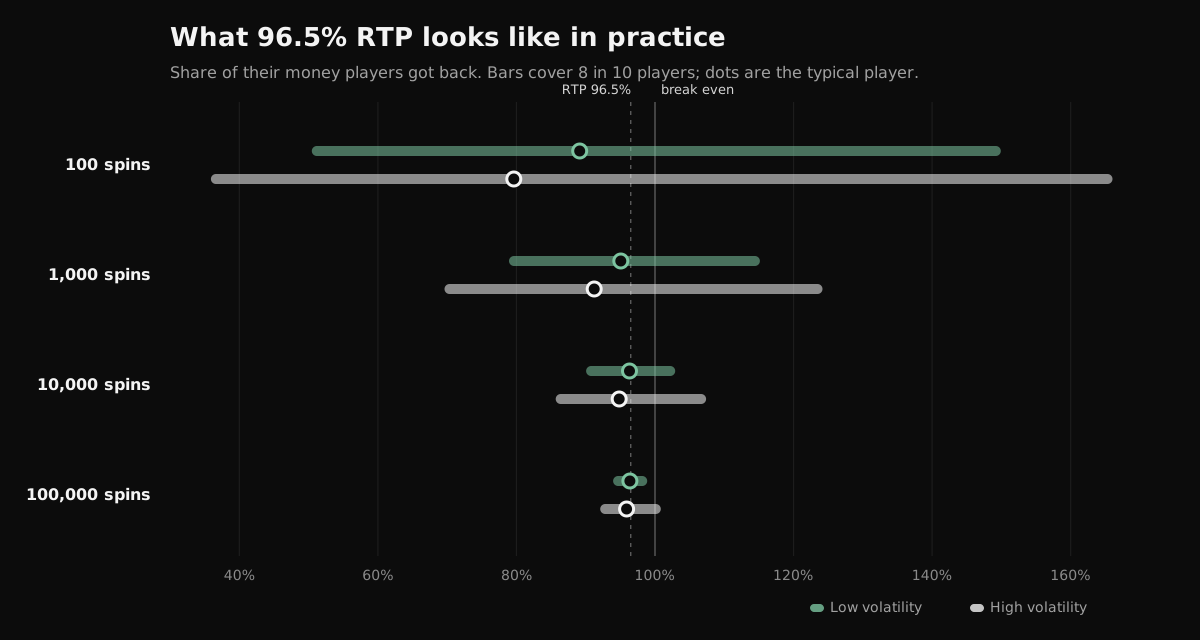
After 100 spins on the high-volatility version, 8 in 10 players got back somewhere between 37% and 165% of what they put in. The typical player got back about 80%. Hardly anyone landed near 96.5%.
After 1,000 spins the range tightens to 70% to 124%. After 10,000, it's 86% to 107%. Only after 100,000 spins, far more than most people ever play on one game, does the number start to look like the label: 93% to 100%.
That's what RTP is. Not a promise about your night. A promise about where the crowd ends up if it plays forever.
How many players actually come out ahead?
This is the part that surprised us most, even though the math says it should happen.
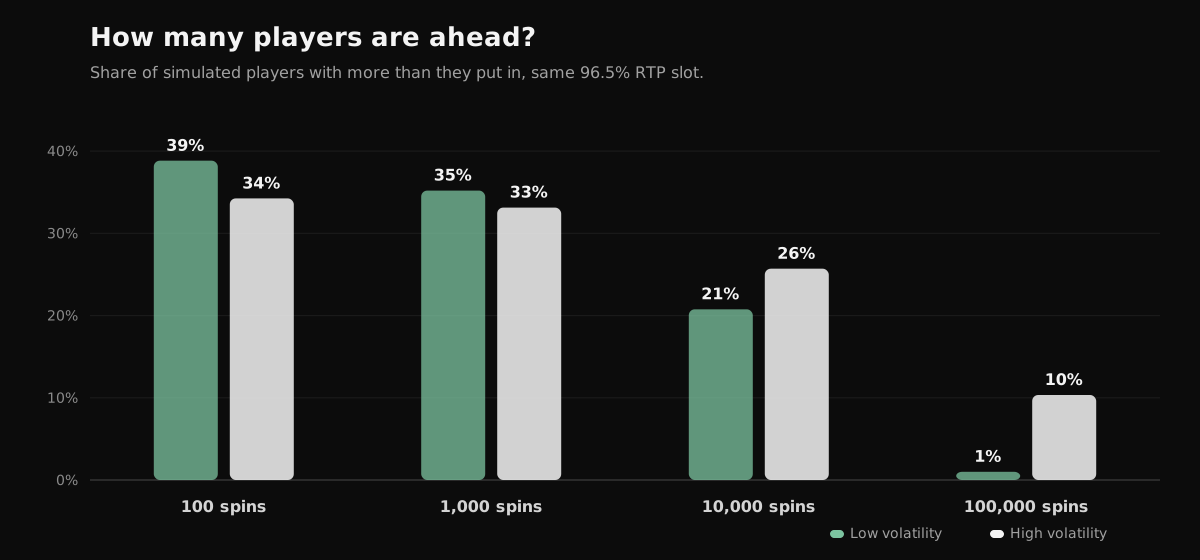
After 100 spins, roughly a third of players are up. That's why slots feel beatable: a third of the people around you on any given night really are winning.
Keep playing and that share shrinks. At 10,000 spins it's 21% on the low-volatility game. At 100,000 spins it's 1%. The house edge is small, but it never sleeps, and over enough spins it's the only thing left standing.
Notice the high-volatility game keeps more players ahead for longer: still 10% at 100,000 spins. Big, rare hits can carry a lucky player a long way. The price is that the unlucky ones fall further and faster.
What a normal night looks like
Averages over 100,000 spins are abstract. So here's something closer to real life: you bring $100, bet $1 a spin, and plan to play 300 spins. We ran that night 20,000 times on the high-volatility slot.
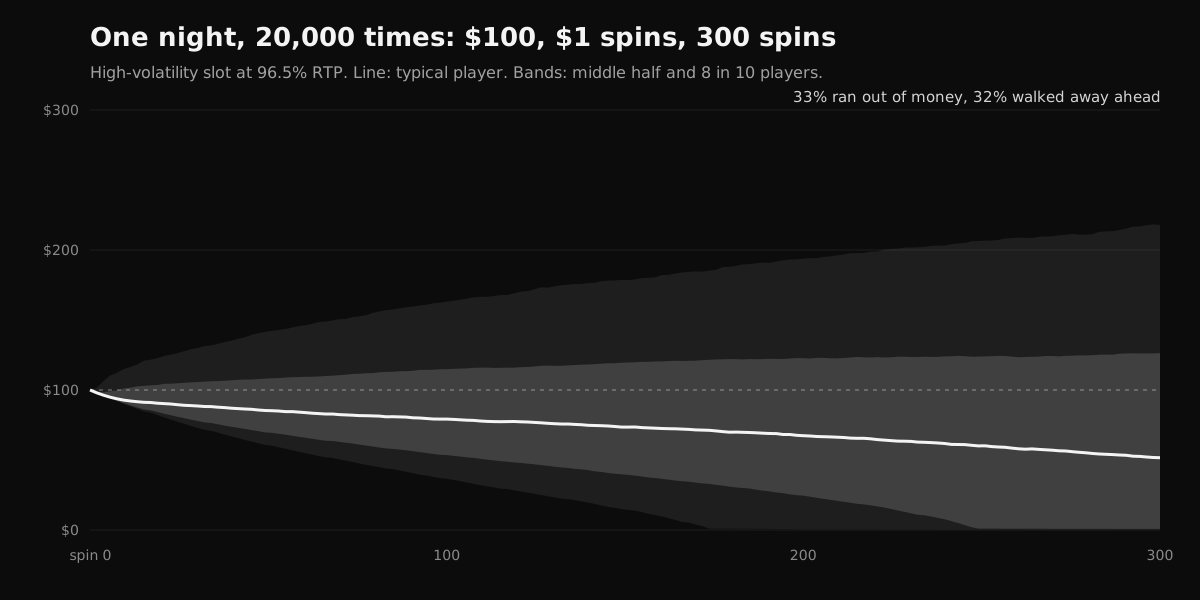
- 33% ran out of money before spin 300.
- 32% walked away with more than $100.
- 12% at least doubled their money.
- The typical player finished with $51.63.
And here's the strange bit. The average finish across all 20,000 players was $90.26, almost exactly what 96.5% RTP predicts for about 270 spins. The average looks gentle. The typical player lost almost half their money.
Both are true at once. A handful of huge wins drag the average up, while most people quietly lose more than the average suggests. When someone tells you a slot "only costs 3.5%", they're describing the average. You are not the average. You're one line in that chart.
RTP or volatility: which matters more for you?
Same 96.5% RTP, same $100, same 300 spins. The only thing we changed was how spiky the game is.
| Volatility | Ran out of money | Finished ahead | Doubled up | Typical finish |
|---|---|---|---|---|
| Low | 14% | 38% | 8% | $78.92 |
| Medium | 23% | 36% | 10% | $67.87 |
| High | 33% | 32% | 12% | $51.63 |
| Extreme | 47% | 28% | 13% | $17.28 |
The RTP didn't move. The experience changed completely.
On a low-volatility game you'll usually still be playing at the end, a bit down. On an extreme one, nearly half of players are done early, but the ones who hit tend to hit big. Neither is better. They're different products. If you want a long session, volatility tells you far more than RTP ever will.
What to actually look at before you spin
Check the RTP anyway. It's still the cost of playing in the long run, and some games ship in more than one RTP version. A 94% version of a game costs you noticeably more over time than a 97% one. The number is usually in the game's info or paytable screen.
Then look at volatility and max win. A 5,000× max win and a 50,000× max win at the same RTP are completely different games. The second one pays for that huge top prize by paying less often everywhere else.
Size your session to the game, not the other way round. If a game is high-volatility, $100 at $1 a spin is a short night for a third of players. Either bring less ambition or bet smaller.
Treat bonus buys as their own game. Buying a bonus round skips the slow part and concentrates all the variance into a single, expensive spin. Sometimes its RTP is listed separately, too.
You can test any of this yourself. Open the simulator, set your balance and bet, switch between volatilities, and watch what happens. If you already played, drop your bet history into the luck meter to see whether your result was bad luck or simply the math.
Quick answers
Does a higher RTP mean I'll win? No. It means you'll lose a little less on average over a very long time. In a single session, volatility and luck swamp the difference between 96% and 97%.
Can a slot be "due" a big win? No. Every spin is independent. A game that hasn't paid in an hour is exactly as likely to pay on the next spin as one that just did.
Is RTP measured per session? No. It's measured over millions of spins, across all players. That's the whole point of this article.
Who checks that the RTP is real? Game studios publish the RTP their math model is built to, and independent testing labs check those models before games are approved for real-money play.
How we ran these numbers
All figures come from our own Monte Carlo simulator. The slot is a model, not a specific game: 96.5% RTP, with payouts spread the way real slot pay tables usually are, lots of small hits and a thin tail of big ones. Real games differ in the details. The shape of the story doesn't.
If any of this makes you rethink how much you're spending, that's a good outcome. Set a budget before you play, and if it stops being fun, free, confidential support is available.